Download Mendeley
Discovery of a Highly Potent and Selective Small-Molecule Inhibitor of In Vivo Anaerobic Choline Metabolism by Human Gut Bacteria.
Pettersson, M., La Sala, G., Gunnarsson, A., Vildhede, A., Sparklin, B., Holm, B., Petrovic, D., Lasky, G., Turick, S., Szydlowska, M., Gopalakrishnan, V., Bake, T., Petersen, J., Branalt, J., Westerlund, K., Taillefer, M., Henricsson, M., Ek, M., Warrener, P., Roth, R., Cohen, T., Sjogren, T., Fahlander, U., Jurva, U., Morias, Y., Liddle, J.(2026) J Med Chem 69: 2115-2129
- PubMed: 41614677
- DOI: https://doi.org/10.1021/acs.jmedchem.5c01451
- Primary Citation Related Structures:
9HT9, 9HTB, 9R0V - PubMed Abstract:
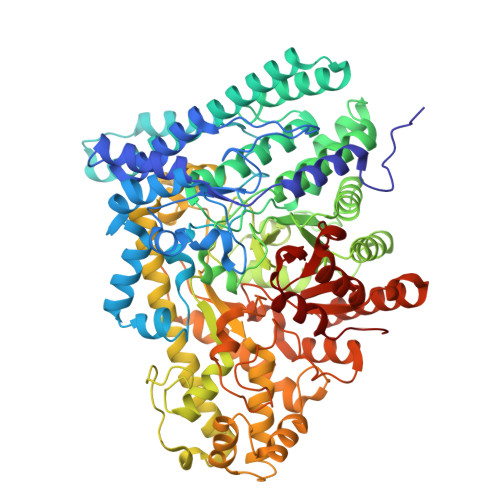
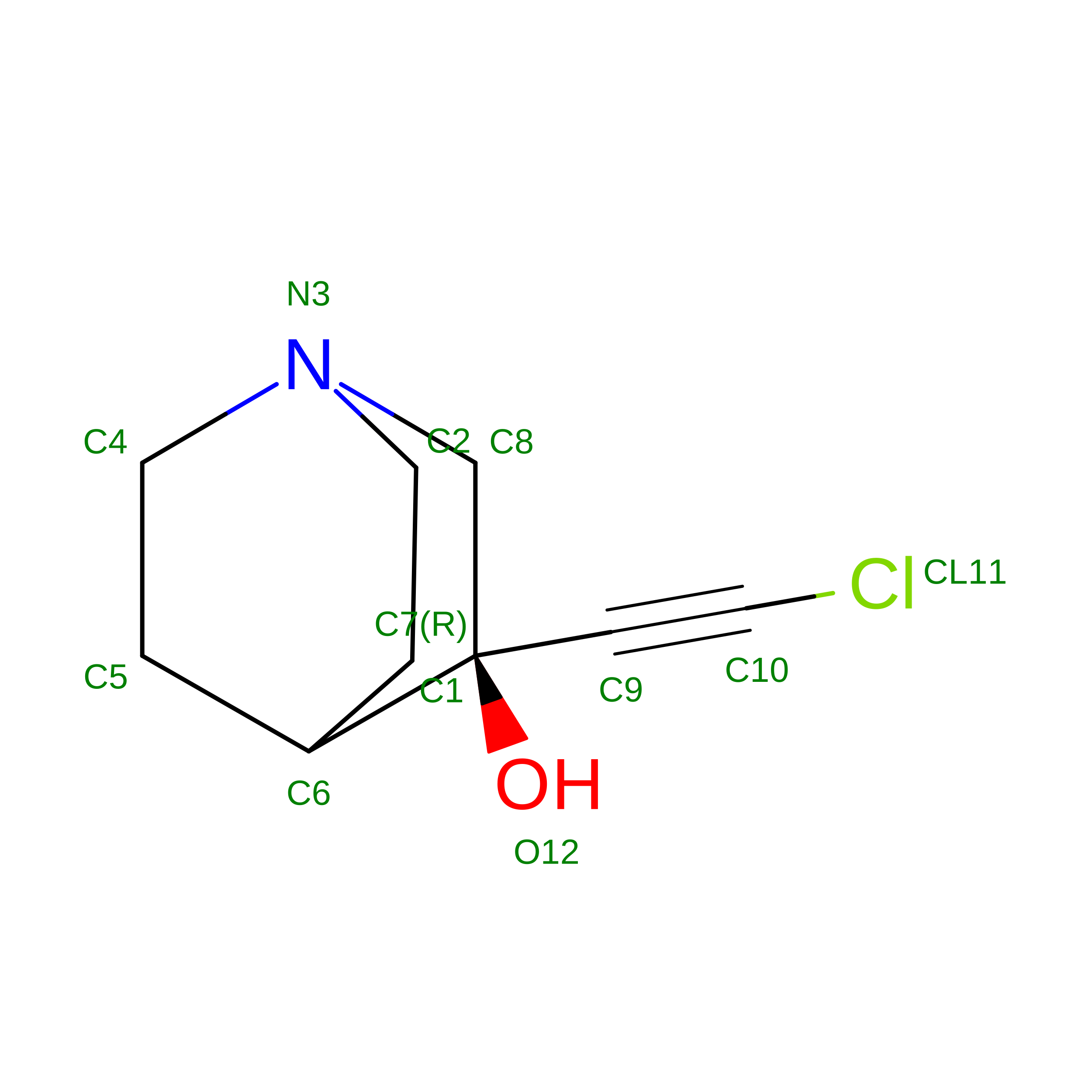
Trimethylamine (TMA) Lyase is an enzyme expressed in human gut bacteria that plays a pivotal role in the formation of trimethylamine oxide (TMAO), a metabolite implicated in the development of heart failure. Here, we describe a strategy to design covalent inhibitors targeting the active site thiyl radical involved in the catalytic cycle of the enzyme under anaerobic conditions. This strategy led to the discovery of 7 , a previously unreported highly potent and selective inhibitor of TMA Lyase. When dosed orally to rats, 7 shows a significant reduction of circulating TMAO levels and, importantly, demonstrates inhibition of TMAO generated from a human microbiome when profiled in a human fecal mouse transplant model.
- Medicinal Chemistry, Research and Early Development, Cardiovascular, Renal and Metabolic Diseases, BioPharmaceuticals R&D, AstraZeneca, Gothenburg 431 83, Sweden.
Organizational Affiliation: