1M1Y | pdb_00001m1y

Chemical Crosslink of Nitrogenase MoFe Protein and Fe Protein


Experimental Data Snapshot

  • Method: X-RAY DIFFRACTION
  • Resolution: 3.20 Å
  • R-Value Free: 
    0.329 (Depositor) 
  • R-Value Work: 
    0.279 (Depositor) 
  • R-Value Observed: 
    0.279 (Depositor) 

wwPDB Validation 3D Report Full Report

Validation slider image for 1M1Y

This is version 1.5 of the entry. See complete history

Literature

Biochemical and Structural Characterization of the Crosslinked Complex of Nitrogenase: Comparison to the ADP-AlF4- Stabilized Structure

Schmid, B.Einsle, O.Chiu, H.J.Willing, A.Yoshida, M.Howard, J.B.Rees, D.C.

(2002) Biochemistry 41: 15557-15565

  • DOI: https://doi.org/10.1021/bi026642b
  • Primary Citation Related Structures: 
    1M1Y, 1M34

  • PubMed Abstract: 

    The transient formation of a complex between the component Fe- and MoFe-proteins of nitrogenase represents a central event in the substrate reduction mechanism of this enzyme. Previously, we have isolated an N-[3-(dimethylamino)propyl]-N'-ethylcarbodiimide (EDC) cross-linked complex of these proteins stabilized by a covalent isopeptide linkage between Glu 112 and Lys beta400 of the Fe-protein and MoFe-protein, respectively [Willing, A., et al. (1989) J. Biol. Chem. 264, 8499-8503; Willing, A., and Howard, J. B. (1990) J. Biol. Chem. 265, 6596-6599]. We report here the biochemical and structural characterization of the cross-linked complex to assess the mechanistic relevance of this species. Glycinamide inhibits the cross-linking reaction, and is found to be specifically incorporated into Glu 112 of the Fe-protein, without detectable modification of either of the neighboring residues (Glu 110 and Glu 111). This modified protein is still competent for substrate reduction, demonstrating that formation of the cross-linked complex is responsible for the enzymatic inactivation, and not the EDC reaction or the modification of the Fe-protein. Crystallographic analysis of the EDC-cross-linked complex at 3.2 A resolution confirms the site of the isopeptide linkage. The nature of the protein surfaces around the cross-linking site suggests there is a strong electrostatic component to the formation of the complex, although the interface area between the component proteins is small. The binding footprints between proteins in the cross-linked complex are adjacent, but with little overlap, to those observed in the complex of the nitrogenase proteins stabilized by ADP-AlF(4)(-). The results of these studies suggest that EDC cross-linking traps a nucleotide-independent precomplex of the nitrogenase proteins driven by complementary electrostatic interactions that subsequently rearranges in a nucleotide-dependent fashion to the electron transfer competent state observed in the ADP-AlF(4)(-) structure.


  • Organizational Affiliation
    • Division of Chemistry and Chemical Engineering 114-96, California Institute of Technology, Pasadena, CA 91125, USA.

Macromolecule Content 

  • Total Structure Weight: 718.06 kDa 
  • Atom Count: 49,464 
  • Modeled Residue Count: 6,296 
  • Deposited Residue Count: 6,364 
  • Unique protein chains: 3

Macromolecules

Find similar proteins by:|  3D Structure
Entity ID: 1
MoleculeChains  Sequence LengthOrganismDetailsImage
Nitrogenase molybdenum-iron protein alpha chain
A, C, I, K
491Azotobacter vinelandiiMutation(s): 0 
EC: 1.18.6.1
UniProt
Find proteins for P07328 (Azotobacter vinelandii)
Explore P07328 
Go to UniProtKB:  P07328
Entity Groups
Sequence Clusters30% Identity50% Identity70% Identity90% Identity95% Identity100% Identity
UniProt GroupP07328
Sequence Annotations
Expand
Reference Sequence
Find similar proteins by:|  3D Structure
Entity ID: 2
MoleculeChains  Sequence LengthOrganismDetailsImage
Nitrogenase molybdenum-iron protein beta chain
B, D, J, L
522Azotobacter vinelandiiMutation(s): 0 
EC: 1.18.6.1
UniProt
Find proteins for P07329 (Azotobacter vinelandii)
Explore P07329 
Go to UniProtKB:  P07329
Entity Groups
Sequence Clusters30% Identity50% Identity70% Identity90% Identity95% Identity100% Identity
UniProt GroupP07329
Sequence Annotations
Expand
Reference Sequence
Find similar proteins by:|  3D Structure
Entity ID: 3
MoleculeChains  Sequence LengthOrganismDetailsImage
nitrogenase IRON protein 1
E, F, G, H, M
E, F, G, H, M, N, O, P
289Azotobacter vinelandiiMutation(s): 0 
EC: 1.18.6.1
UniProt
Find proteins for P00459 (Azotobacter vinelandii)
Explore P00459 
Go to UniProtKB:  P00459
Entity Groups
Sequence Clusters30% Identity50% Identity70% Identity90% Identity95% Identity100% Identity
UniProt GroupP00459
Sequence Annotations
Expand
Reference Sequence

Small Molecules

Ligands 5 Unique
IDChains Name / Formula / InChI Key2D Diagram3D Interactions
CFM

Query on CFM


Download:Ideal Coordinates CCD File
BA [auth I],
FA [auth K],
R [auth A],
V [auth C]
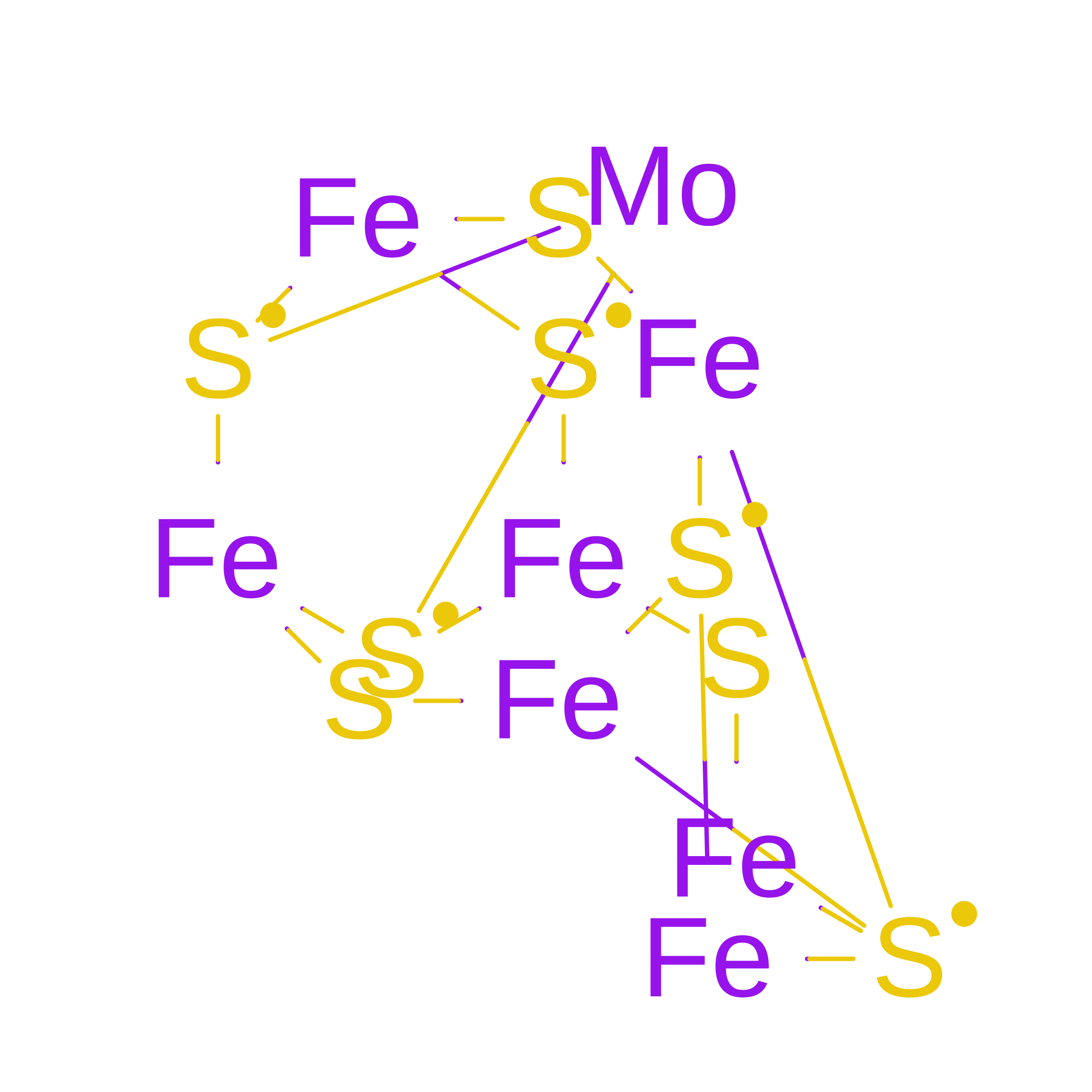
FE-MO-S CLUSTER
Fe7 Mo S9
UZRXIPMKRKMLQF-UHFFFAOYSA-N
CLF

Query on CLF


Download:Ideal Coordinates CCD File
DA [auth J],
GA [auth K],
S [auth A],
X [auth D]
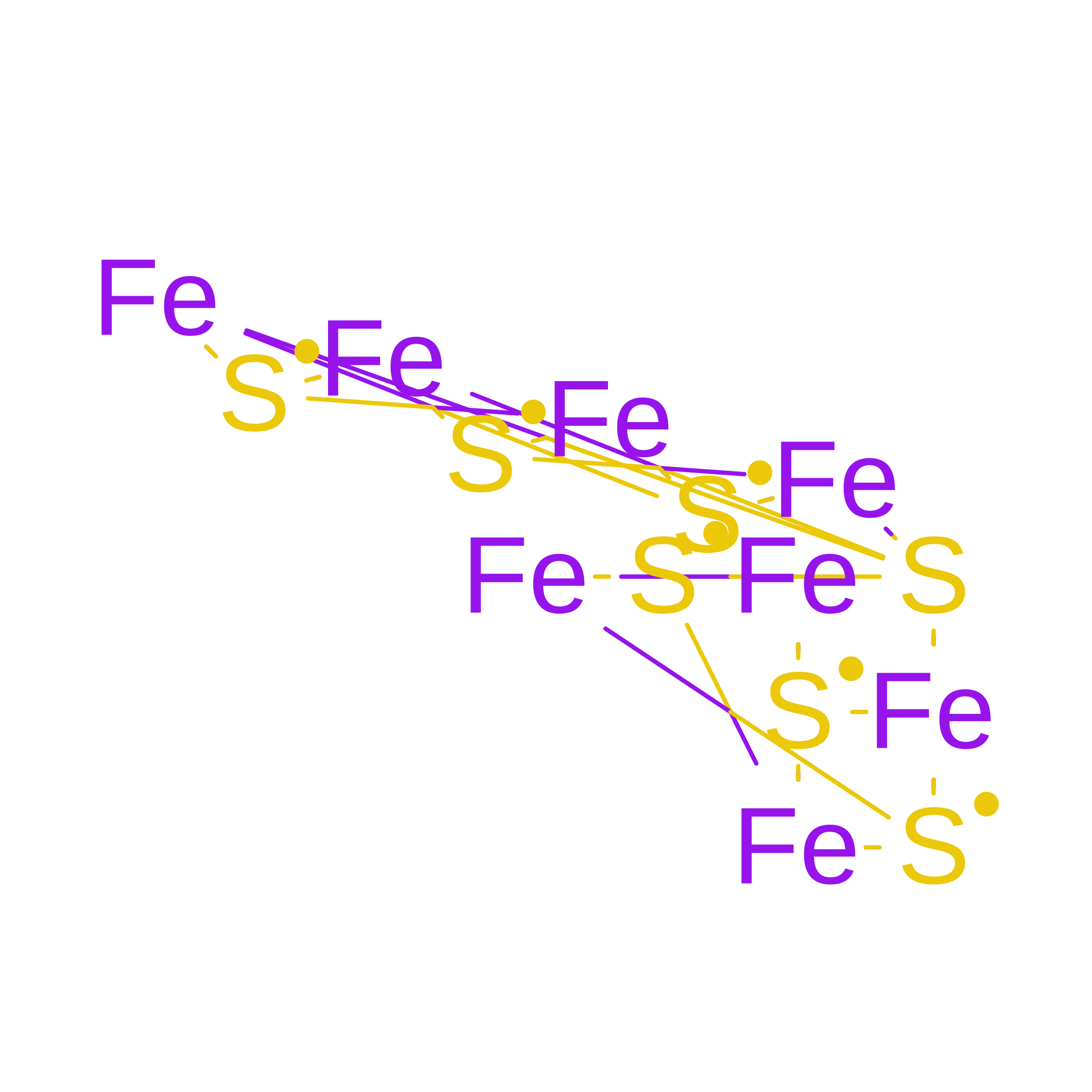
FE(8)-S(7) CLUSTER
Fe8 S7
JKVMXLBGZBULKV-UHFFFAOYSA-N
SF4

Query on SF4


Download:Ideal Coordinates CCD File
IA [auth N],
JA [auth P],
Y [auth E],
Z [auth G]
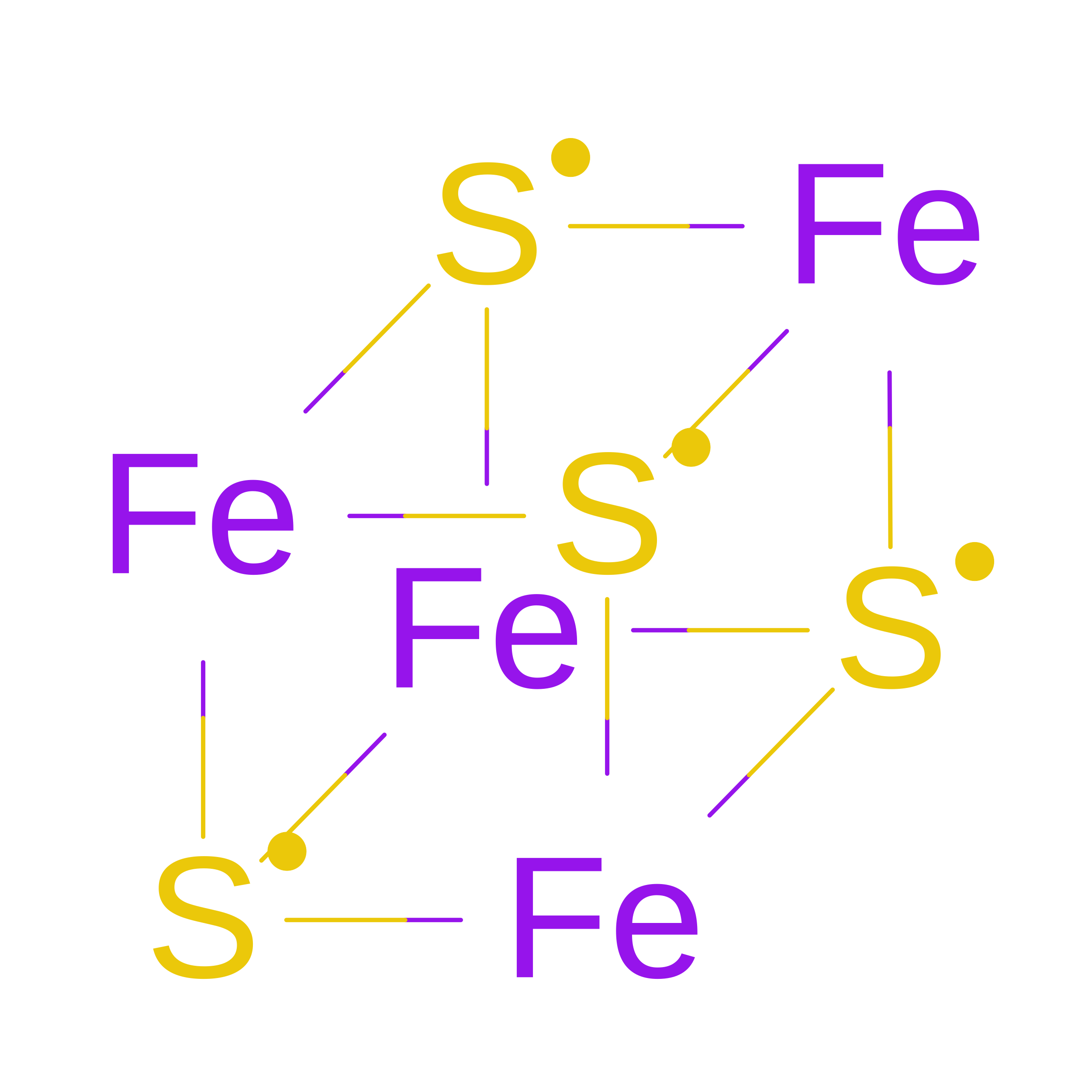
IRON/SULFUR CLUSTER
Fe4 S4
LJBDFODJNLIPKO-UHFFFAOYSA-N
HCA

Query on HCA


Download:Ideal Coordinates CCD File
AA [auth I],
EA [auth K],
Q [auth A],
U [auth C]
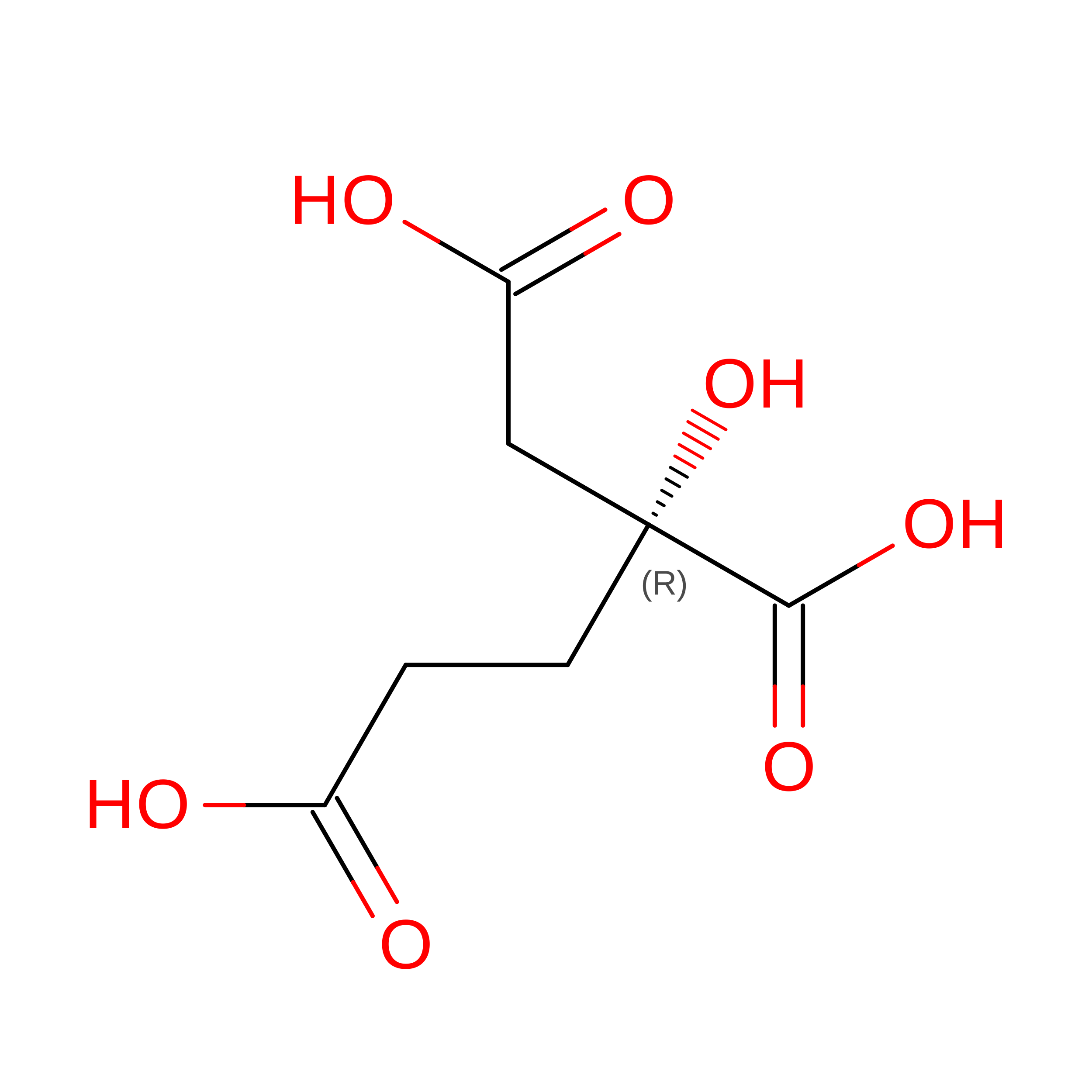
3-HYDROXY-3-CARBOXY-ADIPIC ACID
C7 H10 O7
XKJVEVRQMLKSMO-SSDOTTSWSA-N
CA

Query on CA


Download:Ideal Coordinates CCD File
CA [auth J],
HA [auth L],
T [auth B],
W [auth D]
CALCIUM ION
Ca
BHPQYMZQTOCNFJ-UHFFFAOYSA-N

Experimental Data & Validation

Experimental Data

  • Method: X-RAY DIFFRACTION
  • Resolution: 3.20 Å
  • R-Value Free:  0.329 (Depositor) 
  • R-Value Work:  0.279 (Depositor) 
  • R-Value Observed: 0.279 (Depositor) 
Space Group: P 21 21 21
Unit Cell:
Length ( Å )Angle ( ˚ )
a = 113.267α = 90
b = 214.937β = 90
c = 320.466γ = 90
Software Package:
Software NamePurpose
DENZOdata reduction
SCALEPACKdata scaling
MOLREPphasing
CNSrefinement

Structure Validation

View Full Validation Report


Entry History 

Deposition Data

Revision History  (Full details and data files)

  • Version 1.0: 2003-02-11
    Type: Initial release
  • Version 1.1: 2008-04-28
    Changes: Version format compliance
  • Version 1.2: 2011-07-13
    Changes: Version format compliance
  • Version 1.3: 2019-11-20
    Changes: Advisory, Derived calculations
  • Version 1.4: 2021-07-21
    Changes: Data collection, Derived calculations, Refinement description
  • Version 1.5: 2024-02-14
    Changes: Data collection, Database references